




By Mohamed Abdul Baseeth, Founder, MAAS Consult Middle East Co. Updated June 2026.
Quick Answer
TallyPrime is an accounting and business management software, originally built by Tally Solutions, widely used by SMEs in Saudi Arabia for bookkeeping, inventory, and VAT-ready invoicing. It is sold exclusively through authorised dealers and partners rather than directly by the manufacturer, and Saudi pricing typically falls between roughly SAR 2,400 and SAR 2,900 for the Silver single-user edition and SAR 7,200 to SAR 9,500 for the Gold multi-user edition, depending on the partner and the support package included. Before buying, confirm the dealer is an authorised Tally partner, ask specifically how they handle ZATCA Phase 2 e-invoicing, and get a written quote that separates the license cost from implementation and Tally Software Services (TSS).
Key Takeaways
- TallyPrime is sold only through authorised dealers and partners in Saudi Arabia; there is no direct purchase from Tally Solutions for end customers.
- Silver (single-user) and Gold (multi-user) are the two core editions, and prices vary by partner because implementation, training, and TSS bundling differ.
- ZATCA Wave 24 brings any VAT-registered business with turnover above SAR 375,000 (in 2022, 2023, or 2024) into mandatory Phase 2 e-invoicing by 30 June 2026, which is days away as of this writing.
- TallyPrime alone does not guarantee ZATCA compliance. Compliance depends on how the partner configures and integrates it with a certified e-invoicing solution connected to the Fatoora platform.
- Some businesses that start with TallyPrime later outgrow it and migrate to a fuller ERP like ERPNext. Knowing this in advance saves money.
I’ve spent more than sixteen years implementing ERP and accounting systems across Saudi Arabia and the wider GCC, and TallyPrime questions follow a pattern I see almost every week: a trading company or a small manufacturer has heard of Tally from a relative or a previous job in India, they search for a dealer in Riyadh, and within a day three different resellers have quoted them three different prices for what looks like the same product. Nobody explains why. That confusion is exactly what this guide is meant to clear up.
TallyPrime Saudi Arabia: How to Buy from an Authorised TallyPrime Dealer
What is TallyPrime – Definition: TallyPrime is a business management software covering accounting, inventory, banking, and statutory compliance, built and maintained by Tally Solutions. In Saudi Arabia it is configured with Arabic-English bilingual invoicing and VAT features to suit local regulatory requirements, and it is distributed through a network of authorised dealers and partners rather than sold directly to end users.
Originally developed in India, Tally has built a large installed base across South Asia and the Gulf, largely because of its familiar interface and relatively fast setup time. In Saudi Arabia it tends to appeal most to owner-managed trading firms, retail businesses, and smaller manufacturing operations that want straightforward bookkeeping without the learning curve of a full ERP suite.
Why Saudi Businesses Choose TallyPrime
A few recurring reasons show up in almost every client conversation I have:
Familiarity. A large share of Saudi SMEs, particularly in trading and wholesale, have finance staff who already know Tally from prior roles, which shortens training time considerably.
Speed of setup. Compared to a full ERP implementation, TallyPrime can be installed and configured for basic accounting within days rather than weeks.
Bilingual invoicing. Saudi-localised TallyPrime supports Arabic and English on the same invoice, which matters for both retail customers and B2B clients who expect documents in Arabic.
Inventory and banking in one place. For businesses that just need accounting plus stock tracking and bank reconciliation, TallyPrime covers that ground without unnecessary complexity.
Lower upfront cost than a full ERP. A single-user TallyPrime license costs a fraction of what a multi-module ERP implementation runs, which matters for businesses watching cash flow closely.
What TallyPrime is not built for, and I say this as someone who also implements full ERP systems, is complex multi-branch manufacturing, advanced workflow automation, or businesses that need a single system tying together HR, procurement, manufacturing, and finance. We’ll come back to that distinction later in this guide, because getting it right at the start saves a costly re-platforming exercise eighteen months later.
TallyPrime Pricing in Saudi Arabia (2026)
Pricing is one of the most searched and most poorly explained parts of buying TallyPrime in the Kingdom. Tally Solutions sets a base license structure, but the final price a Saudi buyer pays depends heavily on the dealer, because implementation, onboarding, training, and the first year of Tally Software Services (TSS) are often bundled differently from one partner to the next.
| Edition | Best For | Typical Saudi Price Range (SAR) | Notes |
|---|---|---|---|
| TallyPrime Silver | Single user, one PC, small business or sole proprietor | Approximately SAR 2,400 to SAR 2,900 | One-time perpetual license; includes first-year TSS in most partner packages |
| TallyPrime Gold | Unlimited users on a local network, growing SMEs | Approximately SAR 7,200 to SAR 9,500 | One-time perpetual license; remote access typically needs add-on Virtual User packs |
| TSS Renewal (Silver) | Ongoing updates, support, remote access | Renewed annually, separate from license cost | Lapsed TSS means no product updates and no compliance patches |
| TSS Renewal (Gold) | Ongoing updates, support, remote access | Renewed annually, separate from license cost | Higher than Silver due to multi-user scope |
Why prices vary so widely between dealers: the license itself is set by Tally Solutions, but partners bundle different levels of installation support, data migration, staff training, and ongoing helpdesk access into the headline number. A quote that looks SAR 1,000 cheaper than another often excludes implementation support entirely, which means you pay for it separately later, usually at a worse rate once you’re already locked in.
My advice to every client: ask for an itemised quote that separates the license, the first year of TSS, implementation and data migration, and training. If a dealer cannot break that down clearly, treat it as a warning sign.
How to Choose an Authorised TallyPrime Dealer in Saudi Arabia
This is the checklist I personally walk clients through before they sign anything.
1. Verify authorised partner status directly. Ask the dealer for their Tally partner ID and, if you have any doubt, confirm it independently rather than taking their word for it. Unauthorised resellers sometimes sell grey-market or improperly licensed copies, which creates real risk around updates, support, and legal use.
2. Check their ZATCA Phase 2 track record. Ask specifically: “How many ZATCA Phase 2 integrations have you completed, and can I speak to one of those clients?” A dealer who only sells the license and has no e-invoicing integration experience will leave you exposed as your Wave 24 deadline approaches.
3. Confirm post-sale support, not just the sale. Implementation is the easy part. Ask what happens when you have a payroll question eight months from now, or when TSS is about to expire. Same-language, same-time-zone support matters more than people expect until they actually need it.
4. Get a written, itemised quote. License cost, TSS, implementation, training, and any customisation work should each appear as separate line items.
5. Ask about data migration. If you’re moving off Excel, an older Tally version, or another accounting tool, confirm exactly how historical data will be migrated and tested before go-live.
6. Check regional coverage. A dealer based in Riyadh’s Al Olaya district who only services Central Region clients won’t be much help if your warehouse is in Dammam or your branch is in Jeddah. Confirm they can support your actual footprint, not just your head office.
7. Ask the honest question: “Is TallyPrime even the right fit for us?” A trustworthy partner will tell you when a fuller ERP makes more sense, rather than selling you the only product they carry.
TallyPrime and ZATCA Phase 2 E-Invoicing Compliance
This is the section I’d ask you to read most carefully if your business turnover crossed SAR 375,000 in 2022, 2023, or 2024.
What’s happening right now: ZATCA’s Wave 24 of Phase 2 e-invoicing brings every VAT-registered business with turnover above SAR 375,000 in any of those three years into mandatory Fatoora platform integration by 30 June 2026. The compliance window opened on 1 April 2026, and the deadline is now days away. This is the broadest wave ZATCA has issued to date, because it’s the first time the threshold has dropped low enough to capture a large share of ordinary SMEs rather than only large enterprises.
Where TallyPrime fits in: TallyPrime supports VAT-compliant, bilingual invoice generation, but the software on its own does not automatically make a business ZATCA Phase 2 compliant. Phase 2 compliance requires cryptographic stamping, UUID generation, real-time clearance (for B2B invoices) or 24-hour reporting (for B2C simplified invoices), and a live integration with the Fatoora platform through a properly configured, certified e-invoicing connection. This is configuration and integration work that sits on top of the base accounting software, and it is exactly the kind of work an authorised partner with genuine ZATCA implementation experience should be doing for you, not something you should assume comes “in the box.”
A note on penalties: ZATCA has historically issued warnings and correction periods before escalating to financial penalties for first-time or minor non-compliance, particularly under its fines exemption initiative, but that leniency window closes alongside the Wave 24 deadline. After 30 June 2026, standard penalty schedules apply in full, and reported figures for e-invoicing violations have ranged from roughly SAR 5,000 up to SAR 50,000 depending on the nature and repetition of the violation. The safer assumption for any business is to treat the deadline as firm rather than relying on leniency that may not apply to your specific situation.
If you’re unsure whether your business falls under Wave 24, our team can run a quick compliance assessment against your VAT turnover history. Read our full ZATCA Phase 2 guide for a wave-by-wave breakdown, or go directly to our ZATCA e-invoicing compliance page to start an assessment.
Step-by-Step: How to Buy TallyPrime from an Authorised Partner in Riyadh
Step 1: Define your requirements. How many users need simultaneous access? Do you need payroll, inventory, multi-currency, or just core accounting?
Step 2: Choose Silver or Gold. Single location, single accountant: Silver. Multiple staff accessing the same data on a network: Gold.
Step 3: Shortlist two or three authorised dealers. Verify partner credentials independently rather than relying on a website badge alone.
Step 4: Request a live demo with your own sample data, not a generic vendor demo. This shows you exactly how invoicing, VAT, and reporting will behave for your business.
Step 5: Ask the ZATCA question directly. “How will you get us compliant with Wave 24 before 30 June 2026, and what does that cost separately from the license?”
Step 6: Compare itemised quotes, not headline prices. License, TSS, implementation, training, and e-invoicing integration should all be visible.
Step 7: Finalise the license and schedule implementation. Confirm a realistic go-live date with data migration and staff training built into the timeline, not squeezed in afterward.
Step 8: Plan for renewal from day one. Calendar your TSS renewal date now so it never lapses unexpectedly, especially near a compliance deadline.
TallyPrime vs Alternatives in the Saudi Market
| Software | Best For | Saudi VAT/ZATCA Readiness | Typical Starting Cost |
|---|---|---|---|
| TallyPrime | Small trading and retail businesses needing fast, familiar accounting | Requires partner-configured ZATCA Phase 2 integration | License from ~SAR 2,400 (Silver) |
| ERPNext | Growing businesses needing accounting, inventory, manufacturing, and HR in one connected system | Configurable for full ZATCA Phase 2 compliance as part of implementation | Subscription or implementation-based, typically lower long-term total cost of ownership than legacy ERPs |
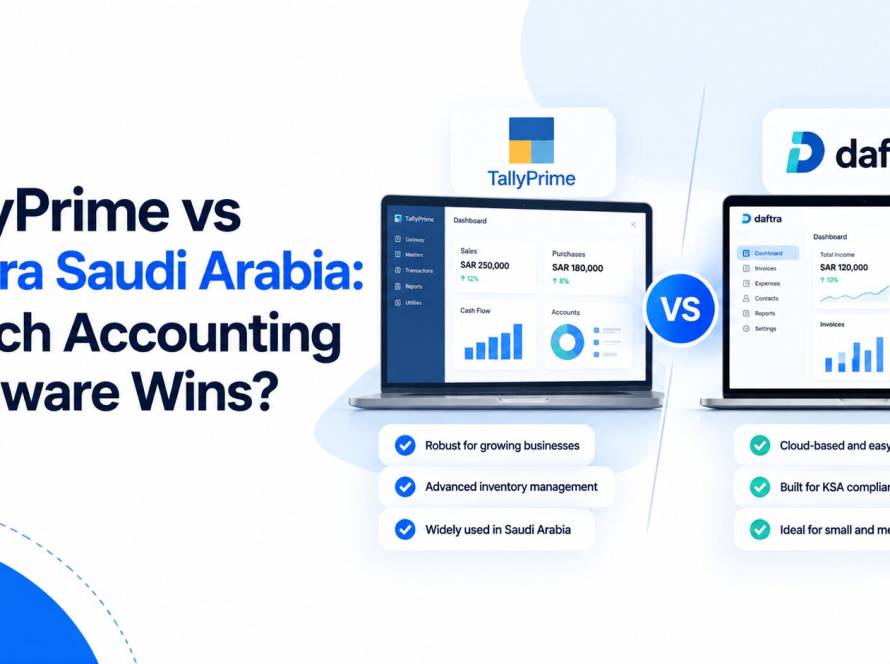
| Daftra | Cloud-based SME accounting and invoicing | Built-in e-invoicing features marketed for the Saudi market | Monthly subscription model |
| Zoho Books | Cloud accounting for small businesses already on the Zoho ecosystem | Region-specific VAT features, less Saudi-specific depth than localised tools | Monthly subscription model |
| QuickBooks | Small business accounting, popular internationally | Limited native Saudi VAT/ZATCA localisation | Monthly subscription model |
This table is not meant to crown a single winner. The right answer depends entirely on how complex your operations are today and where you expect them to be in two to three years.
TallyPrime or ERPNext: An Honest Decision Framework
Because we implement both TallyPrime and ERPNext, I can give you a more balanced answer than a dealer who only sells one product.
Choose TallyPrime if: you run a single-location trading, retail, or services business, your team already knows Tally, your accounting needs are straightforward, and you want the lowest upfront cost with the fastest setup time.
Choose ERPNext if: you have multiple branches or warehouses, you manufacture or assemble products, you need procurement, HR, and CRM connected to your finances in one system, or you’ve already outgrown what a standalone accounting tool can realistically manage.
A pattern worth knowing: I’ve worked with several Saudi businesses that started on Tally, grew past 15 to 20 staff, added a second branch, and then found themselves stitching together spreadsheets to connect inventory, procurement, and finance because Tally was never designed to be a full operational ERP. Migrating at that point is more disruptive than it would have been to start with the right tool. If there’s real doubt about which path fits, it’s worth having that conversation honestly before you buy, not two years into using the wrong system. See how we approach ERPNext implementation in Saudi Arabia if you want to compare both paths side by side.
Common Mistakes Businesses Make When Buying TallyPrime in Saudi Arabia
Buying from an unverified reseller to save a few hundred riyals. Grey-market or improperly licensed copies create real exposure around updates, support, and legality, and the savings rarely outweigh the risk.
Treating the license price as the total cost. Implementation, training, data migration, and ZATCA integration are often quoted separately, and businesses that don’t ask end up surprised.
Letting TSS lapse. Once Tally Software Services expires, you lose access to product updates, including the compliance patches that matter most around deadlines like Wave 24.
Assuming TallyPrime is automatically ZATCA compliant. As covered above, compliance depends on proper integration work, not the base software alone.
Choosing Silver to save money when multiple staff need access. This forces awkward workarounds, like sharing one login, which creates audit trail and accountability problems.
Not planning for growth. A business that expects to double headcount within a year should think honestly about whether TallyPrime, or a fuller ERP, is the better long-term foundation.
Best Practices for a Smooth TallyPrime Implementation in KSA
- Migrate historical data in a test environment first and reconcile it against your existing books before going live.
- Train at least two staff members on the system, not just one, to avoid a single point of failure.
- Set up your VAT and Arabic invoicing configuration correctly from day one rather than retrofitting it later.
- Build a TSS renewal reminder into your calendar at least 60 days before expiry.
- Schedule your ZATCA Phase 2 integration with enough lead time before any wave deadline; certified solution providers get busier as deadlines approach, and rushed onboarding increases error risk.
Industry-Specific Recommendations
Trading and wholesale businesses typically get the most value from TallyPrime’s inventory and ledger tracking, particularly when managing multiple suppliers and fast-moving stock.
Retail businesses should pay close attention to point-of-sale integration and barcode support, and confirm the dealer can configure 24-hour B2C reporting correctly for ZATCA Phase 2.
Professional services firms (consulting, accounting, legal) generally need less inventory functionality and more focus on clean invoicing, multi-currency handling if serving international clients, and straightforward financial reporting.
Small manufacturers should evaluate carefully whether TallyPrime’s inventory module is sufficient, or whether production planning, bill-of-materials, and multi-stage manufacturing needs point toward ERPNext instead.
A Real Implementation Example
One client, a Riyadh-based trading firm with around 18 staff across two branches, came to us already running TallyPrime Silver on a single machine, with the owner’s daughter manually re-entering invoices for the second branch every evening. They didn’t need a different product, they needed the right edition and a proper network setup. We moved them to TallyPrime Gold, configured multi-user access across both branches, integrated their ZATCA Phase 2 e-invoicing ahead of their wave deadline, and trained their two accounts staff over three days. The manual re-entry process disappeared entirely, and month-end closing time dropped from roughly five days to two. Details have been generalised to protect client confidentiality, but the underlying pattern, businesses outgrowing a single-user setup before anyone notices, is extremely common.
Expert Insight
“The mistake I see most often isn’t choosing the wrong software, it’s choosing the right software from the wrong partner. TallyPrime is a solid product when it’s implemented properly and kept compliant. The failures I get called in to fix almost always trace back to a license sold with no real support behind it.” — Mohamed Abdul Baseeth, Founder, MAAS Consult Middle East Co.
Final Thoughts
TallyPrime remains one of the fastest, most familiar ways for a Saudi SME to get accounting and VAT-ready invoicing running without the overhead of a full ERP rollout. But the product is only half the decision. Who sells it to you, how they handle your ZATCA Phase 2 integration, and whether they’ll still answer the phone a year after the sale, matters just as much as the license price on the page. With Wave 24’s 30 June 2026 deadline now imminent, the businesses getting this right are the ones treating the dealer relationship, not just the software purchase, as the real decision.
Work With an Authorised TallyPrime Partner in Riyadh
MAAS Consult Middle East Co. is based in Al Olaya, Riyadh, and supports businesses across Saudi Arabia and the GCC with TallyPrime licensing, implementation, and ZATCA Phase 2 e-invoicing integration, alongside ERPNext implementation for businesses that need a fuller ERP. Our support team operates in five languages, 365 days a year, so help is available when you actually need it, not just during business hours on a weekday.
If you’re not sure whether your business falls under ZATCA Wave 24, want an honest TallyPrime-vs-ERPNext recommendation, or simply need a transparent, itemised TallyPrime quote, get in touch with our team for a free discovery call.
FAQs
Is TallyPrime available in Saudi Arabia? Yes. TallyPrime is sold across Saudi Arabia through a network of authorised Tally dealers and partners, with localised Arabic-English bilingual invoicing and VAT features for the Saudi market.
How much does TallyPrime cost in Saudi Arabia? Saudi pricing for the single-user Silver edition typically falls between roughly SAR 2,400 and SAR 2,900, while the multi-user Gold edition typically ranges from approximately SAR 7,200 to SAR 9,500. Exact pricing depends on the dealer and what implementation and support is bundled in, so request an itemised quote.
Is TallyPrime ZATCA Phase 2 compliant? TallyPrime supports VAT-ready, bilingual invoicing, but full ZATCA Phase 2 compliance, including cryptographic stamping and live Fatoora platform integration, requires correct configuration and integration work by your implementation partner. The base software alone does not guarantee compliance.
What is the difference between TallyPrime Silver and Gold? Silver is a single-user license for one computer, suited to sole accountants or small businesses. Gold supports unlimited simultaneous users on a local network, suited to teams or multiple branches accessing the same data.
Can I buy TallyPrime directly from Tally Solutions, or do I need a dealer? TallyPrime is distributed exclusively through authorised dealers and partners. There is no direct end-customer purchase channel from the manufacturer in Saudi Arabia.
Is TallyPrime easy to learn? Most users with basic accounting knowledge become comfortable with core TallyPrime functions, like voucher entry and basic reporting, within a few days, though mastering advanced features like inventory costing or payroll typically takes longer with proper training.
Does TallyPrime support Arabic invoicing? Yes, Saudi-localised TallyPrime supports bilingual Arabic-English invoices, which is necessary for both regulatory and customer-facing requirements in the Kingdom.
What happens if I don’t renew Tally Software Services (TSS)? Once TSS lapses, you stop receiving product updates and compliance patches, which can leave you exposed exactly when a ZATCA wave deadline or a regulatory change requires an update.
TallyPrime vs ERPNext: which is right for my business in Saudi Arabia? TallyPrime suits single-location businesses with straightforward accounting needs and a preference for lower upfront cost and fast setup. ERPNext suits businesses needing manufacturing, multi-branch operations, or HR and procurement connected to finance in one system. A genuinely unbiased partner should be willing to recommend either, depending on your situation.
Where is MAAS Consult located, and do you serve all of Saudi Arabia? MAAS Consult is based in Al Olaya, Riyadh, and supports clients across Saudi Arabia and the GCC, including the Eastern Province around Dammam, with multilingual support available 365 days a year.
Do you offer support beyond just selling the TallyPrime license? Yes. Our engagement includes license sourcing, implementation, data migration, staff training, ZATCA Phase 2 e-invoicing integration, and ongoing TSS renewal management.
How long does a typical TallyPrime implementation take? A straightforward single-branch setup can be completed within a few days. Multi-branch or multi-user implementations with ZATCA integration and staff training typically take one to three weeks, depending on data migration complexity.

3 Comments