



ERPNext Partner in Saudi Arabia: How to Choose the Right One

Choosing an ERPNext partner in Saudi Arabia decides whether the project ends with a system your team uses or one they work around. ERPNext is open source, so the outcome depends on the people who configure it, localise it for ZATCA and payroll, migrate your data and support it after go-live.
I have spent more than 16 years implementing ERP systems across the GCC, and Maas Consult has delivered 1,000+ ERP implementations, 800+ ZATCA compliance engagements and 20+ ERPNext rollouts. That also makes us one of the companies you may be comparing. This guide is written so you can test any partner, including us, with questions that have checkable answers.
Quick answer
An ERPNext partner in Saudi Arabia is an independent company that implements, customises and supports ERPNext for Saudi businesses. Frappe, the company behind ERPNext, runs a partner program with four tiers (Emerging, Bronze, Silver and Gold) and public profiles on frappe.io. A listing helps, but your shortlist should be decided by Saudi references, proven ZATCA Phase 2 delivery and a written post-go-live support plan.
Key takeaways
- A Frappe partner tier shows where a company stands in Frappe’s program. It does not prove ZATCA delivery, Arabic setup or Saudi payroll experience, so check those separately.
- ERPNext does not ship with ZATCA Phase 2 by default. Your partner needs a localisation app, a tested onboarding process and a plan for rejected invoices.
- ZATCA Wave 25 lowers the threshold to SAR 187,500 of taxable turnover, with an integration deadline of 1 February 2027 for selected taxpayers.
- ERPNext has no per-user licence fee, but hosting, localisation, migration, training and support still cost money. Compare partners on a three-year view.
- Post-go-live support is the factor buyers most often underestimate. Get it in writing before you sign.
What an ERPNext partner does, and what it does not
An ERPNext partner sells services around the software: scoping, configuration, customisation, data migration, training and support. Because ERPNext carries no per-user licence fee, a partner’s work is mostly services, hosting and support. Ask early how that support is delivered and priced after go-live, because that is where the relationship is tested.
Not every provider that mentions ERPNext is the same kind of company. This table separates the common types.
| Provider type | Usually a good fit when | Check before hiring |
|---|---|---|
| Listed Frappe partner | You want a company with a public profile, certified staff and a track record Frappe can see. | Tier, certifications and maturity score on the profile, plus Saudi references. |
| Independent ERPNext consultancy | The team has strong local delivery and references, even without a listing. | Named Saudi clients, and who owns the production site and admin credentials. |
| Freelancer | You need a small, well-defined change on a system that already works. | Backup cover, handover documents and who holds admin access. |
| Self-implementation | A very small team has simple processes and in-house IT time. | Who owns ZATCA onboarding, backups and upgrades. |
When a freelancer or self-setup is the right choice
If you run one company with a handful of users, standard accounting and stock flows, and someone inside the business who will own the system, a freelancer or a self-set-up on Frappe Cloud can be a sensible, lower-cost route. A partner earns its fee when ZATCA integration, data migration from another system, several departments or multiple branches are involved.
How Frappe’s partner program works, and what the tiers prove
Frappe publishes a partner guide and a public directory at frappe.io/partners. According to the guide, partners complete a minimum number of Frappe product certifications, and each profile shows the partner’s certifications and a Partner Maturity Model (PMM) score on a five-point scale. The program has four tiers: Emerging, Bronze, Silver and Gold.
For the Emerging and Bronze tiers, the published criteria combine monthly recurring revenue on Frappe Cloud with a PMM score of 3 or above. That measures how a company performs inside Frappe’s program. It does not measure Saudi delivery. A partner in a lower tier can have an excellent ZATCA record, and a higher-tier partner based abroad may never have cleared a Saudi invoice.
Frappe’s own guide to working with partners adds three useful points for buyers: favour standard implementations over heavy customisation, ask for a scope breakdown because both low and high quotes cause problems, and decide up front who owns the hosting account.
How to check a partner in four steps
- Open the Frappe partner directory, choose the country and find the company’s profile.
- Read the tier, the certifications and the maturity score shown on the profile.
- Confirm that the company name and website match the business that is quoting you.
- Ask for Saudi references, and ask who will lead your project and which ERPNext certification that person holds.
Where Maas Consult stands
Maas Consult has been listed as a Frappe Emerging Partner since June 2026, and four team members hold ERPNext certifications. The names and dates are on our Frappe partner page. Emerging is the entry tier, so we would rather you judge us on references from our 20+ ERPNext implementations than on the badge.
Why ZATCA Phase 2 experience should decide your shortlist
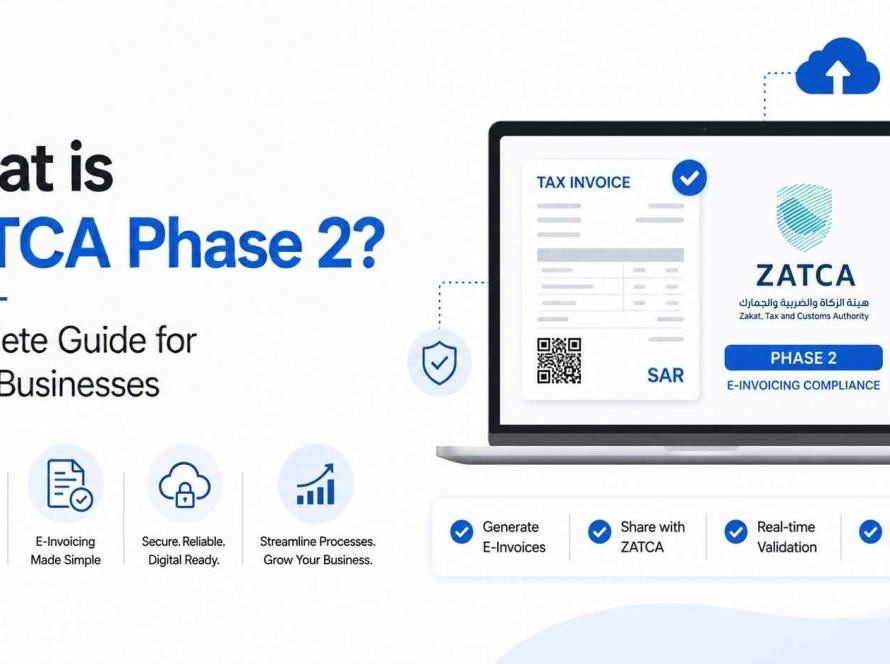
ERPNext does not include ZATCA Phase 2 out of the box. It is added through a localisation app and a configuration that covers onboarding (the CSR and the compliance and production certificates), XML generation and signing, and submission to ZATCA’s Fatoora platform. Frappe’s Saudi Arabia page points to third-party apps for this, and the open-source KSA Compliance app from LavaLoon (AGPL-3.0) supports Phases 1 and 2. In practice, “ERPNext is ZATCA-ready” means ERPNext plus a localisation app, set up correctly and kept up to date.
B2B invoices go through clearance, and B2C invoices are reported within 24 hours. Which wave you fall into depends on ZATCA’s criteria:
- Wave 24: taxable revenue above SAR 375,000 in 2022, 2023 or 2024, with integration due by 30 June 2026 (KPMG).
- Wave 25: announced on 24 July 2026, with taxable turnover above SAR 187,500 in any of 2022, 2023, 2024 or 2025, and integration due by 1 February 2027 (EY Tax News).
ZATCA says it notifies taxpayers of their wave at least six months in advance, so check the notice you received rather than relying on revenue alone. Our Phase 2 guide explains the waves in full.
Six questions to put to any ERPNext partner
- Which localisation app do you use, who maintains it, and how do you test its updates before they reach production?
- How many Saudi Phase 2 go-lives have you completed on ERPNext specifically, not on other ERP systems?
- Can you show a sandbox run that includes a rejected invoice and how it is corrected?
- Who holds the production certificate, and who renews it?
- Have you handled both B2B clearance and B2C reporting for a business like ours?
- What happens to invoices when ZATCA’s platform is unreachable?
Apply the same test to us: ask for ERPNext-specific references, not just an overall ZATCA number. The technical steps are in our ERPNext ZATCA integration guide, and our ZATCA e-invoicing service page covers what we deliver.
ERPNext partner scorecard for Saudi Arabia
Use this table to compare two or three partners on the same footing. Score each answer yourself, and ask for proof wherever the answer is a claim.
| Criterion | Ask | A strong answer looks like |
|---|---|---|
| Frappe listing | Are you on the Frappe partner directory? | A public profile whose tier, certifications and maturity score match what you were told. |
| Saudi delivery | How many ERPNext go-lives in the Kingdom, and in which industries? | A number, plus two or three references you can call. |
| ZATCA Phase 2 | Which app do you use, and how many ERPNext sites have you taken from sandbox to production? | A named app, a maintenance plan and a sandbox demo on request. |
| Local support | Where are the engineers who will support us? | A named team, honest coverage of your cities, and working hours that overlap yours. |
| Industry fit | Have you delivered for a business like ours? | A reference in a similar sector, not a generic module list. |
| Arabic and bilingual output | Can we see Arabic and bilingual print formats? | Live samples from a working system, not slides. |
| Saudi payroll | How do you handle GOSI and WPS files? | They name the add-on or custom work involved and who maintains it. |
| Data migration | What is your plan for moving data from Tally, QuickBooks or spreadsheets? | A separate workstream, with opening balances signed off by your finance lead. |
| Support after go-live | What are your response times and hypercare period? | Written response times, a named contact and a defined 30 to 90 day plan. |
| Training | Who trains our team, and in which language? | Role-based sessions with Arabic and English material. |
| Handover | Who owns the site, the server and the admin credentials? | You do, with customisations documented. |
| Scope control | Will scope, milestones and change requests be in writing? | A signed scope document and a change-request process. |
Red flags and common mistakes
- Unqualified compliance claims. “100% ZATCA compliant” with no named app, no sandbox evidence and no client you can speak to is a claim, not proof.
- Choosing on price alone. A half-finished implementation costs more in rework, staff time and disruption than a better-scoped quote would have.
- Assuming global experience transfers. Strong references in Europe or India do not show that a partner understands ZATCA, GOSI, WPS and Arabic invoicing.
- Treating data migration as a small task. Years of Tally or spreadsheet data carry more complexity than most businesses expect.
- Skipping realistic user acceptance testing. Dummy data hides the configuration gaps that real transactions expose.
- Depending on one person. Ask how many people on the team can support your site if the project lead is unavailable.
- No local support route. Time zone gaps and no on-site option become expensive when something urgent breaks.
What an ERPNext project costs: the factors, not a price list
ERPNext is open source under the GPLv3 licence, so there is no per-user licence fee. That does not make the project free. The cost sits in these areas:
- Implementation services: driven by the number of modules, users, branches and legal entities.
- Hosting: your own server, or Frappe Cloud, which is priced per site rather than per user.
- Localisation and customisation: the ZATCA app, payroll add-ons and any custom workflows.
- Data migration and training: scoped by the quality and volume of your existing data.
- Support and upgrades: the ongoing cost after go-live.
Ask each partner for a three-year view that includes all five, quoted against the same scope. We scope every project individually, so the fastest route to a realistic figure is a short conversation about your modules, users, branches and legacy system. You can request a consultation and we will walk through the cost drivers for your case.
A realistic ERPNext implementation timeline
Most frustration after a poor ERP experience comes from timelines that were never realistic. These windows overlap, which is normal, and they match the planning ranges on our ERPNext implementation page.
| Phase | Typical window | What should be finished |
|---|---|---|
| Discovery | Weeks 1 to 2 | Process map, requirements and a written scope. |
| Setup | Weeks 2 to 4 | Chart of accounts, items, warehouses and tax templates. |
| Data migration | Weeks 3 to 5 | Cleansed data imported and opening balances reconciled. |
| Customisation and integration | Weeks 4 to 7 | Custom fields, workflows and ZATCA sandbox testing. |
| Training | Weeks 6 to 8 | Role-based sessions for finance, operations and HR. |
| Go-live and stabilisation | Weeks 8 to 12 | Parallel running where practical, then hypercare support. |
As a planning range, micro-businesses often finish in 3 to 4 weeks, mid-sized SMEs in 8 to 12 weeks, and manufacturing or multi-entity projects in 12 to 16 weeks. Ask any partner to show where ZATCA testing sits in the plan.
ERPNext or another platform: when each is the right choice
A good partner will tell you when ERPNext is not the best fit. Here is an honest view of the options Saudi buyers compare most often.
SAP Business One
Choose SAP when
Your group already runs SAP, you have SAP-certified resources in house, or you need group reporting that your existing team already manages.
ERPNext fits when you want no per-user licence and a lighter project. See ERPNext vs SAP for Saudi SMEs.
Dynamics 365
Choose Dynamics when
You are built around Microsoft 365, Azure and Power BI, and you have the IT capacity and budget to run a larger platform.
ERPNext fits when you do not need that ecosystem and want a simpler stack.
Odoo
Choose Odoo when
A specific Odoo app or an Odoo partner you trust suits your process. Odoo has a free Community edition and a paid Enterprise edition licensed per user.
ERPNext fits when you prefer a single GPLv3 codebase with no edition split. We work with both, so our advice follows your requirements.
Daftra
Choose Daftra when
You want a fast start on a cloud accounting and ERP service built for Arabic-speaking SMEs, with standard modules and no custom workflows.
ERPNext fits when you have outgrown fixed modules or need more control over data and workflows.
TallyPrime
Choose TallyPrime when
You are an existing Tally user, or you want simple yet powerful accounting rather than a full ERP. It is ready-made and accounting-first, and auditors favour it because entries post and show their effect immediately, with no secondary posting.
ERPNext fits when you need multi-warehouse inventory, procurement workflow, manufacturing, CRM or payroll in one system.
Many of our ERPNext projects start with a business outgrowing TallyPrime. Migration goes more smoothly when the same team understands how Tally structures ledgers, vouchers and stock data and how ERPNext needs to receive them. If you are weighing the two, our TallyPrime dealer page and TallyPrime sales and solutions page set out the TallyPrime side. For a wider market view, see our ERP software in Saudi Arabia guide.
Industry fit: what your partner should be able to show
Ask for a reference in your sector. Our 20+ ERPNext implementations span manufacturing, printing and packaging, legal services, operations and maintenance, and contracting, and this is what to look for in each type of business.
| Industry | What the partner should demonstrate |
|---|---|
| Trading and distribution | Multi-warehouse stock, purchase and sales flows, credit limits, and B2B clearance with B2C reporting. |
| Manufacturing | Bills of materials, work orders, subcontracting and costing tied to stock and accounts. |
| Contracting and projects | Project costing against budget, subcontractor billing and timesheets. |
| Retail and food and beverage | Point of sale, multi-branch stock, and batch and expiry tracking. |
| Professional services | Timesheet billing, retainers and service invoices with ZATCA clearance. |
Before you sign: a short checklist
- Write a requirements brief that lists the modules you need, the processes causing pain and your compliance obligations.
- Insist on a written scope with deliverables, milestones and a change-request process.
- Name internal owners for finance, warehouse and HR, and give them time for configuration review and testing.
- Plan data migration as its own workstream with its own checkpoints.
- Budget for training, because a well-trained team on a simple setup outperforms an untrained team on a heavy one.
- Agree a 90-day post-go-live plan with response times, escalation paths and review calls.
- Confirm that you will own the site, the data and the admin credentials at handover.
In our experience, preparation matters more than software capability. The projects that go best are the ones where discovery came first, the data was reasonably clean and a senior person inside the business drove adoption. That is why we begin with a structured three-session discovery workshop before configuring anything. It is a slower start that tends to give a cleaner go-live.
About Maas Consult
Maas Consult Middle East Co. is a Riyadh-based ERP implementation firm serving businesses across Saudi Arabia. In plain terms:
- Listed as a Frappe Emerging Partner since June 2026, with four ERPNext-certified team members.
- 1,000+ ERP implementations delivered, 800+ ZATCA compliance engagements and 20+ ERPNext implementations.
- Support from 8 AM to 8 PM, 365 days a year, and training available in five languages.
- We also sell and support TallyPrime, so we can advise on staying with Tally as well as moving to ERPNext.
Frequently asked questions
What is an ERPNext partner in Saudi Arabia?
An ERPNext partner is an independent company that implements, customises and supports ERPNext for Saudi businesses. Some are listed on Frappe’s public partner directory with a tier, certifications and a maturity score. Others are independent consultancies or freelancers, so always check what a provider can prove.
How do I check whether an ERPNext partner is listed by Frappe?
Open the partner directory at frappe.io/partners, choose the country and look for the company’s profile. Match the name and website to the business quoting you, then read the tier, certifications and maturity score. A missing listing is not automatically a problem, but it means you should lean harder on Saudi references.
What do the Frappe partner tiers mean?
Frappe’s program has four tiers: Emerging, Bronze, Silver and Gold. For Emerging and Bronze, the published criteria combine monthly recurring revenue on Frappe Cloud with a Partner Maturity Model score of 3 or above. The tier shows standing inside Frappe’s program. It does not prove ZATCA delivery or Saudi industry experience.
Is ERPNext free in Saudi Arabia?
The software is open source under the GPLv3 licence, so there is no per-user licence fee. You still pay for implementation, hosting, localisation apps such as ZATCA e-invoicing, data migration, training and ongoing support. Ask partners for a three-year cost view on the same scope.
Does ERPNext support ZATCA Phase 2?
Yes, through a localisation app and correct configuration, not out of the box. The setup covers onboarding certificates, XML generation and signing, and submission to ZATCA’s Fatoora platform. Your partner should name the app, show a sandbox run and explain how rejected invoices are handled. See our ERPNext ZATCA integration guide.
Which businesses must integrate with ZATCA Phase 2 now?
ZATCA selects taxpayers in waves. Wave 24 covered taxable revenue above SAR 375,000 with a 30 June 2026 deadline. Wave 25, announced on 24 July 2026, covers taxable turnover above SAR 187,500 in any year from 2022 to 2025, with integration due by 1 February 2027. Check the notice ZATCA sent you, and read our ZATCA e-invoicing page for support.
How long does an ERPNext implementation take in Saudi Arabia?
As a planning range, micro-businesses take 3 to 4 weeks, mid-sized SMEs 8 to 12 weeks, and manufacturing or multi-entity projects 12 to 16 weeks. Data quality, the number of branches and ZATCA testing move these figures. Details are on our ERPNext implementation page.
How much does an ERPNext implementation cost in Saudi Arabia?
There is no fixed price. Cost depends on modules, users, branches, customisation, data migration scope, hosting and the support you need after go-live. We scope every project individually and share a cost breakdown before any engagement begins. Request a consultation to discuss your case.
Can ERPNext replace TallyPrime for a Saudi business?
Yes, when you need more than accounting: multi-warehouse inventory, procurement workflow, manufacturing, CRM, payroll and ZATCA integration in one system. If you are an existing Tally user who wants simple yet powerful accounting, TallyPrime can still be the right choice. See our TallyPrime sales and solutions page.
Does ERPNext support Arabic and Hijri dates?
ERPNext can be used in Arabic with right-to-left layout, and bilingual print formats such as Arabic and English invoices are set up during implementation, so ask to see a sample. Hijri date display is available through a marketplace add-on rather than in core ERPNext, so confirm whether you need it.
What should I ask an ERPNext partner before hiring them?
Ask whether they are listed by Frappe, how many ERPNext go-lives they have completed in Saudi Arabia, which ZATCA app they use and how many sandbox-to-production runs they have done. Ask for references in your industry, the post-go-live response times in writing, and who will own the site and admin credentials at handover.
Is Maas Consult an ERPNext partner?
Maas Consult has been listed as a Frappe Emerging Partner since June 2026, and four team members hold ERPNext certifications. We have completed 20+ ERPNext implementations in Saudi Arabia. Please verify the listing on Frappe’s directory and ask us for references. More detail is on our Frappe partner page.
How does a company become a Frappe partner?
According to Frappe’s partner guide, a company applies to the Partner Program, completes a guided flow that confirms it meets the criteria, and must have team members who completed Frappe product certifications. There is no annual partnership fee. Criteria change over time, so check the current Frappe partner guide.
Comparing ERPNext partners?
Book a free 45-minute ERP consultation. We will review your current systems, check your ZATCA position and outline a realistic implementation plan for your industry and size, and you are welcome to bring other partners’ quotes along.
Request a free consultationChat on WhatsApp
MB
Mohamed Abdul Baseeth, Founder and Managing Director, Maas Consult Middle East Co.
Mohamed has implemented ERP systems across the GCC for more than 16 years, with a focus on ERPNext, TallyPrime and ZATCA e-invoicing for Saudi businesses.
Sources
- Frappe partner guide: why partner
- Frappe: a guide to working with Frappe partners
- Frappe partner guide: reaching the Emerging tier
- Frappe partner guide: reaching the Bronze tier
- EY Tax News: Saudi Arabia announces 25th wave of Phase 2 e-invoicing integration
- KPMG: Saudi Arabia mandatory e-invoicing, 24th group of taxpayers
- ZATCA: e-invoicing roll-out phases
- LavaLoon KSA Compliance app (GitHub)


3 Comments